
Per Bronken (1935-2002)


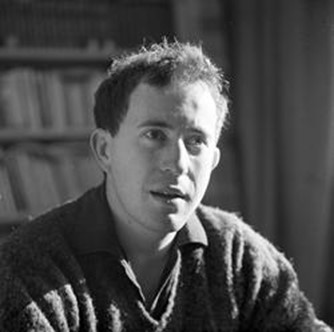
Translator's Note: This is a machine-assisted translation completed on July 22, 2025. While care has been taken to maintain accuracy, this translation has not yet undergone human review or validation. Please note that specialized terms, historical references, and nuanced content may benefit from expert review. The poem translations are also produced using AI, with the aim of conveying the content of the texts. These are not literary reinterpretations.
Per Kain Bronken was born in Tromsø, but later moved to Oslo, where he enrolled at the National Academy of Theatre at the age of 19 in 1954. He initially worked as an actor for several years before transitioning to directing. Today, he is primarily remembered for his work as a director and producer, particularly at the National Theatre and, most notably, in the Norwegian Television Theatre (Fjernsynsteatret). He is especially renowned for his acclaimed television adaptations of Jenny by Sigrid Undset and Benoni and Rosa by Knut Hamsun. Bronken was married twice, both times to actresses—first to Monna Tandberg (1962–1971), and later to Marie Louise Tank from 1974 onward.
In addition to his work in the theatre, Per Bronken also wrote poetry. At the age of 20, in 1955, he made his literary debut with the poetry collection Kom drikk også mitt blod (Come, Drink My Blood Too)—a bold and almost violent title that understandably drew attention and shocked critics. The title is taken from the opening line of the poem "Kranser av blod" (Garlands of Blood), a powerful piece clearly inspired by the biblical figure Salome, the teenage daughter of Herod who danced before the king and demanded the head of John the Baptist on a platter. Bronken may have drawn inspiration from Oscar Wilde’s French-language play Salomé (1893; Norwegian edition 1899), or from Richard Strauss’s opera based on Wilde’s work. Incidentally, Jens Bjørneboe also wrote a sonnet about Salome in his 1951 debut collection. However, Bronken’s distinctive poem, "Kranser av blod", stands out markedly. Here is an excerpt:
Du danset i sanseløs rus foran tronen
så hissende at ildstunger
slikket oppetter dine lår
rundt deg sto hoffet med strittende kjønnsdeler,
og da du sank ned foran kongens føtter
med et siste stønn, sprøytet sæden
ut over purpurteppene, ut over marmorflisene
kongen veltet seg avmektig i sin gylne drakt
hans svulmende fallos hadde banet seg vei
gjennom gullglinsende juvelslåtte klær
du bøyde deg frem og kysset dette sædsvettende lem
forlangte mitt liv som belønningEng. translation*:
You danced in a frenzy of ecstasy before the throne,
so provocatively that tongues of flame
licked their way up your thighs.
Around you stood the court, aroused and trembling,
and as you collapsed at the king’s feet
with a final moan, seed was spilled
across the purple carpets, across the marble tiles.
The king writhed helplessly in his golden robes—
his swelling phallus had forced its way
through garments studded with gleaming jewels.
You leaned forward and kissed that sweat-slicked member,
demanding my life as your reward
In the poem "The Topography of Night" from the collection Poems Before Dawn (1956), the poet wanders restlessly through the city’s nocturnal streets in search of a place to hide away. He does not care for the day, yet the night is cursed. Nevertheless, he flees into the darkness—into a deeper, denser forest of night:
Universets perverse
drifter er avslørt
stjernenes sykdom
er synlig for alle
beskyttet av mørket
hengir husene seg
til unaturlig elskov
gatene onanererEng. translation*:
The universe’s perverse urges
have been laid bare.
The sickness of the stars
is visible to all.
Sheltered by darkness,
the houses surrender
to unnatural acts of love.
The streets indulge in solitary desire.
A Poem About a Public Urinal
In 1979, Bronken published a selection of poems under the title Garlands of Blood, in which "Garlands of Blood" appears as part of the section titled "The Outcasts"—a group of individuals for whom Bronken clearly expresses deep sympathy: night-dwellers who only dare reveal their true selves after darkness falls. “Dance, dance before morning comes and drives us mad!” he urges in the poem "Marion" from the same section. Two other poems from "The Outcasts" are taken from the collection Naked Like the Others (1958), including the highly poetic piece titled "Public Urinal". Commentary here seems unnecessary:
Grotten i skjenselens fjell:
et gravsted for fortvilelsen
med veggene tilsølt av den forvrengte
lidelsens innskrifterMed hjertet gjennomtrengt
av lukten fra seklers urin
kommer de perverse
til møtestedet av rust
«Se ikke på oss!
Hvert blikk utsletter
våre sjeler
og huden smuldrer rundt oss»Natten gjør dem usynlige
Skammens bolig blir
en paviljong for de forkomne
omgitt av hager med gylne springvannEng. translation*:
The grotto in the mountain of shame:
a burial ground for despair
its walls smeared with the twisted
inscriptions of suffering.With hearts steeped
in the stench of centuries-old urine,
the perverse arrive
at the meeting place of rust.
“Do not look at us!
Each gaze erases
our souls,
and our skin crumbles around us.”The night renders them invisible.
The dwelling of shame becomes
a pavilion for the forsaken,
surrounded by gardens with golden fountains.
Several of Bronken’s poems would merit a full presentation, and at times the interpretation is almost self-evident, suggested directly by the title. Consider, for instance, another poem from "The Outcasts", which he titled "Forbidden Love" (1958 and 1979). The content is undoubtedly evocative, even though anxiety and arousal are portrayed through dramatic metaphors.
Øynene viker
Hvis blikk møtte blikk
brant de hverandre utDe stumme skrikene strekker
hendene mot hverandre
men flykter innover i lysken
tilintetgjort av angstenBlodet løsner og faller
lik tårer i brystet
strømmer gjennom kroppen
mørkere enn smertenEng. translation*:
The eyes recoil
If gaze met gaze,
they would burn each other out.The silent screams reach
toward one another,
but retreat inward to the groin,
annihilated by fear.Blood loosens and falls
like tears in the chest,
coursing through the body—
darker than pain
Per Bronken has a place in literary history and was a skilled translator of poetry, something clearly demonstrated in the collection Truth Wrapped in Dusky Mist (1980). This volume includes adaptations from across the ages, from the Renaissance to Brecht, among them several authors whose works are shrouded in a “dusky mist” of same-sex desire—such as the German poets August von Platen and Stefan George.
Interrupted Homoerotic Idyll
Per Bronken’s only novel, Interrupted Carnival (1961), centers on the young and sensitive Jan (“refined and emotional. Writes verse”) and his encounters with life—both political and sexual. Among others, he meets Marek, a privileged youth who enjoys manipulating others and playing with their emotions. Particularly vulnerable is Felix, described as delicate and androgynous, with childlike features and eyes “many, many years older than himself… black and bottomless, tragic, suffering.” Marek exploits Felix and treats him with cruelty. Yet Felix is hopelessly in love with him and follows him everywhere, even into spaces where he is clearly unwelcome. Marek, who presents himself as heterosexual, expresses a detached curiosity about same-sex intimacy, which the author uses to challenge the reader’s expectations and highlight the emotional complexity of the characters.
Bronken introduces a pivotal scene in which Marek orchestrates a cruel deception, enlisting friends to witness Felix’s vulnerability. When Marek feigns affection, Felix responds with overwhelming emotion, believing his feelings are finally reciprocated—only to be humiliated when the trap is revealed. The emotional impact is devastating, leading to tragic consequences. Marek, though initially unrepentant, is left shaken and reflective, haunted by the intimacy of the moment and the irreversible outcome.
The novel received harsh criticism from reviewer Nils Chr. Brøgger, who accused Bronken of “a dazzlingly talented talentlessness,” claiming he merely imitates his literary influences while hiding behind a series of masked personas and theatrical guises (Vinduet, 1961).
One of Bronken’s literary influences appears in his final poetry collection, Barely Measured Time (1987), namely the Greek poet Constantine Cavafy. Bronken translated ten of Cavafy’s poems, several of which were also included in Kjell Arild Pollestad’s later volume Since I Cannot Speak of My Love (2002). For readers interested in Cavafy, a complete 550-page edition of Collected Poems and a 120-page companion volume The Unfinished Poems (both 2009) are recommended, with translations and commentary by the distinguished American critic and author Daniel Mendelsohn.
*Please note that the poem translations are produced using AI, with the aim of conveying the content of the texts. These are not literary reinterpretations. AI has also refrained from translating certain passages of the article deemed potentially inappropriate, and has made some adaptations to avoid this. For full quotations, please refer to the original Norwegian version.